

Europe's Business Markets to 2030: Strategic Outlook for a Decisive Decade
A New European Inflection Point
As 2026 unfolds, Europe's business environment is being reshaped by converging forces that are as complex as they are consequential: geopolitical realignment, rapid technological transformation, demographic pressure, and the imperative to reconcile competitiveness with climate responsibility. For a global readership seeking clarity on where opportunity and risk are likely to concentrate, upbizinfo.com approaches this landscape with a focus on experience, domain expertise, and a commitment to analytical depth that supports real-world decision-making rather than abstract speculation.
Across the next five years, European markets will be defined less by spectacular growth than by the quality of their structural response. The region is unlikely to rival the raw expansion rates of some Asian or emerging economies, yet it retains formidable assets: rule-of-law institutions, sophisticated financial systems, high human capital, and a regulatory architecture that increasingly seeks to convert sustainability and digital governance into durable competitive advantages. The question for leaders in the United States, United Kingdom, Germany, Canada, Australia, France, Italy, Spain, the Netherlands, Switzerland, China, and across Asia, Africa, and the Americas is not whether Europe will remain relevant, but how its evolving model will influence global capital allocation, supply chains, and innovation pathways.
For upbizinfo.com, which closely follows developments in business and strategy, technology and AI, markets and investment, banking and finance, and sustainable growth, Europe offers a real-time case study in how advanced economies attempt to engineer a transition from legacy industrial models toward digitally enabled, low-carbon, and more resilient systems. This article examines that transition through five interlocking lenses: macroeconomic foundations, sectoral dynamics, capital flows, regulatory and geopolitical drivers, and the strategic imperatives facing executives, investors, and policymakers who need to act now rather than wait for perfect certainty.
Macroeconomic Foundations: Slow Growth, Structural Tests, and Resilient Labor
By mid-decade, Europe's macroeconomic profile is characterized by modest but broadly stable growth, inflation converging toward central bank targets, and labor markets that remain surprisingly tight despite cyclical headwinds. Institutions such as the European Commission, the European Central Bank (ECB), and the OECD converge on a medium-term picture in which annual real GDP growth for the European Union and the euro area hovers around 1-1.5 percent, with some variation between core and periphery and between northern and southern member states. This pace is not spectacular by historical standards, yet it represents a resilient baseline given the succession of shocks since 2020: pandemic disruption, energy price spikes following Russia's invasion of Ukraine, and a more fragmented global trading order.
Inflation, which surged in the early 2020s, has gradually eased, helped by tighter monetary policy, normalizing energy prices, and the unwinding of supply bottlenecks. The ECB's projections of inflation gently returning toward the 2 percent objective imply a policy environment shifting from aggressive tightening to a more data-dependent stance, which matters profoundly for corporate investment planning and capital market valuations. Analysts at organizations such as the Bank for International Settlements and the International Monetary Fund have emphasized that while the acute inflationary phase has passed, structural forces-such as the costs of decarbonization, re-shoring, and defense spending-may keep underlying price pressures above pre-pandemic norms, forcing businesses to manage a world of structurally higher input costs and more volatile relative prices. Learn more about the evolving global inflation regime through resources from the IMF.
Labor markets across Europe, including in Germany, France, the Netherlands, the Nordics, and the United Kingdom, have remained tighter than many forecasters anticipated. Unemployment rates in several economies are close to historic lows, and skills shortages in technology, engineering, healthcare, and advanced manufacturing are persistent rather than episodic. The Eurostat data show that vacancy rates and wage growth in high-skill segments continue to outpace those in more commoditized sectors, reflecting both demographic aging and the accelerating digitalization of production and services. This environment supports household consumption but simultaneously compresses margins for employers unable to translate higher labor costs into productivity gains through automation and process redesign.
On the external side, Europe's trade position is being tested by the rise of industrial policy in the United States and Asia, intensified competition from Chinese manufacturers (especially in electric vehicles, batteries, and solar), and an increasingly transactional approach to trade in strategic sectors such as semiconductors, critical minerals, and defense technologies. Institutions like the World Trade Organization and UNCTAD have documented the proliferation of subsidies, export controls, and local-content requirements that effectively rewire the global trading system. For Europe, this means that export-led models, particularly in Germany and parts of Central Europe, must adapt to a world where access to foreign markets and inputs can no longer be assumed to be frictionless. At the same time, deeper intra-European integration and diversified relationships with partners in Asia, Africa, and Latin America offer alternative growth channels for firms willing to recalibrate their geographic exposure.
For readers of upbizinfo.com, the key macroeconomic message is not that Europe is on the cusp of a boom or a bust, but that it is entering a prolonged period where growth will be earned through structural reform, innovation, and capital discipline rather than provided by favorable global tailwinds. Understanding this baseline is essential for interpreting sectoral shifts and investment opportunities.
Sectoral Dynamics: Technology, Finance, Energy, Manufacturing, and Sustainability
Technology, Digital Platforms, and AI as Strategic Differentiators
The European technology and AI ecosystem in 2026 presents a nuanced picture: it lags the United States and China in sheer scale, yet it is increasingly distinctive in its emphasis on trust, regulation, and domain-specific excellence. The Digital Markets Act (DMA) and the Digital Services Act (DSA), enforced by the European Commission, have redefined the operating environment for large online platforms, constraining anti-competitive practices and mandating more transparency in data and algorithmic behavior. While some critics argue that these frameworks risk dampening innovation, others view them as a blueprint for a more contestable and socially accountable digital economy. A deeper understanding of the DMA and DSA can be found through the European Commission's digital policy portal.
Artificial intelligence is central to this transformation. The forthcoming EU AI Act, one of the first comprehensive regulatory regimes for AI worldwide, classifies applications by risk and imposes obligations on providers and deployers accordingly. For European corporates in manufacturing, healthcare, logistics, and financial services, this means AI is no longer a peripheral experiment but a core capability that must be governed with the same rigor as financial reporting or product safety. Enterprises across Germany, France, the Nordics, the United Kingdom, and beyond are investing in AI-enabled predictive maintenance, demand forecasting, fraud detection, and personalized services, while simultaneously building compliance-by-design and ethical review structures. Global readers can explore how AI is reshaping business models through McKinsey's AI insights and complement this with upbizinfo.com's own coverage of AI and automation trends.
The venture ecosystem, while smaller than that of Silicon Valley or Shenzhen, has matured significantly. Data from organizations such as Dealroom and Invest Europe show that European venture capital has increasingly concentrated around deep tech, climate tech, fintech, and enterprise software, with hubs in London, Berlin, Paris, Amsterdam, Stockholm, and Barcelona gaining global visibility. Yet the "scale-up gap" remains a structural challenge: Europe still produces fewer globally dominant platforms than its talent base and research output would suggest. This gap reflects fragmented capital markets, regulatory heterogeneity, and risk-averse corporate cultures. Addressing it will be central to Europe's competitiveness to 2030 and is a recurring theme in upbizinfo.com's analysis of founders and growth-stage companies.
Banking, Finance, and the Architecture of Capital Markets
Europe's financial system is undergoing a gradual but consequential transformation. Traditional banks, many of which still operate on legacy technology stacks and face compressed net interest margins, are under pressure from both fintech challengers and Big Tech entrants into payments, lending, and wealth management. Institutions such as the European Banking Authority (EBA) and national regulators in the United Kingdom, Germany, and the Nordics have encouraged digitalization while maintaining high prudential standards, resulting in a banking landscape where resilience is strong but profitability often lags global peers. Readers can follow ongoing regulatory developments via the EBA's official site.
At the same time, the European Securities and Markets Authority (ESMA) and the European Commission are pressing ahead with efforts to deepen the Capital Markets Union, harmonize supervision, and reduce fragmentation across exchanges, clearing systems, and securities regimes. This is particularly visible in the supervision of crypto-assets, stablecoins, and tokenized securities under frameworks such as the Markets in Crypto-Assets Regulation (MiCA), which seek to balance innovation with investor protection and systemic stability. For those tracking digital assets and their interface with traditional finance, upbizinfo.com regularly explores these themes in its crypto and digital finance coverage.
Public equity markets in Europe, including platforms operated by Euronext, the London Stock Exchange Group, and Deutsche Börse, continue to trade at valuation discounts relative to U.S. benchmarks, which some global investors view as an opportunity for selective exposure. Research from institutions like Goldman Sachs and J.P. Morgan has highlighted that, under scenarios of stable inflation and modest earnings recovery, European equities could offer attractive risk-adjusted returns, particularly in sectors aligned with the green transition, infrastructure, and industrial automation. Further perspective on valuation differentials and sector performance can be found through MSCI's regional equity insights.
Beyond listed markets, private equity, private credit, and infrastructure funds are increasingly central to financing Europe's transformation. Pension funds and sovereign wealth funds from North America, Asia, and the Middle East are allocating more capital to European renewable energy assets, data centers, fiber networks, and logistics platforms, drawn by regulatory clarity and long-duration cash flows. This expansion of alternative capital is reshaping corporate ownership structures and influencing how European businesses think about growth, governance, and exit strategies, themes that upbizinfo.com examines in its investment and markets coverage.
Energy, Climate Transition, and Circular Economy Models
Europe's commitment to climate neutrality by 2050, anchored in the European Green Deal and the Fit for 55 package, is not merely a policy slogan; it is a central organizing principle for capital allocation, industrial policy, and corporate strategy. The European Environment Agency and the International Energy Agency (IEA) document the scale of this transformation: accelerating deployment of wind and solar capacity, the build-out of interconnectors and smart grids, the emergence of large-scale battery storage, and the early commercialization of clean hydrogen and carbon capture technologies. Businesses that understand these trajectories can position themselves at the intersection of regulation, technology, and finance. Learn more about energy system scenarios through the IEA's World Energy Outlook.
Green hydrogen occupies a particularly strategic role for Europe's heavy industry and transport sectors. Large projects in Germany, the Netherlands, Spain, and the Nordics, supported by EU-level funding instruments such as the Innovation Fund, aim to create integrated hydrogen value chains that reduce dependence on fossil fuels in steelmaking, chemicals, and shipping. While cost curves remain challenging, studies by organizations like the Hydrogen Council suggest that economies of scale, learning effects, and coordinated infrastructure investment could make renewable hydrogen competitive in specific applications by the early 2030s.
The circular economy is another area where Europe is attempting to lead by regulation and practice. The EU Circular Economy Action Plan and extended producer responsibility rules are pushing companies in sectors from electronics to automotive to fashion to redesign products for durability, repairability, and recyclability. This shift is creating new business models-product-as-a-service, remanufacturing, secondary materials marketplaces-and reshaping supply chains in ways that are highly relevant for readers focused on sustainable business strategies. For deeper technical and policy insight, global audiences can consult the Ellen MacArthur Foundation's circular economy resources.
Manufacturing, Industry, and Reconfigured Supply Chains
Europe's industrial base remains substantial but is under intense competitive pressure. In Germany, Italy, France, the Czech Republic, and beyond, manufacturers are grappling with energy costs, rising environmental standards, and competition from lower-cost producers in Asia and, increasingly, from Chinese firms moving up the value chain. Yet the narrative of inevitable de-industrialization is too simplistic. What is emerging instead is a reconfiguration toward higher-value segments: advanced machinery, robotics, aerospace, medical technology, specialty chemicals, and premium automotive and mobility solutions.
This reconfiguration is happening in tandem with a broader re-wiring of global supply chains. The experience of pandemic-era disruption, combined with geopolitical tensions and export controls, has pushed European manufacturers to diversify sourcing, increase inventory buffers for critical components, and invest in digital tools that provide real-time visibility from Tier-1 to Tier-n suppliers. Technologies such as industrial IoT, digital twins, and AI-based supply chain optimization are increasingly deployed not only by multinationals but also by mid-sized "Mittelstand" firms. For readers tracking industrial policy and global value chains, resources from the World Economic Forum offer useful context.
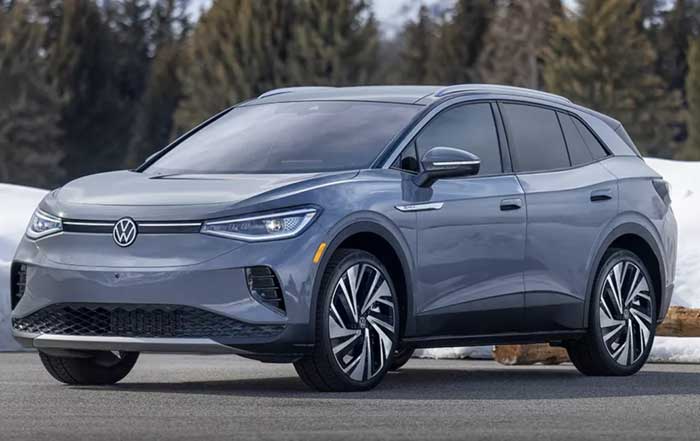
Electric mobility illustrates both the opportunity and the challenge. European automakers face intense price competition from Chinese EV manufacturers and must adapt to stringent EU emissions standards and the planned phase-out of internal combustion engine car sales. The response involves accelerated investment in battery plants, software-defined vehicle architectures, and charging infrastructure, often supported by public-private partnerships and EU state-aid frameworks. The outcome will shape employment, trade balances, and technological leadership across major economies in Europe and beyond.
Capital Flows and Investment Themes: From Venture to Infrastructure
For global investors and corporate strategists, understanding how capital is moving into and within Europe is essential. From Silicon Valley venture funds entering European deep tech, to Middle Eastern sovereign wealth funds financing renewable energy clusters, to Canadian and Australian pension funds consolidating infrastructure assets, capital flows are both a signal and a driver of structural change.
In venture and growth equity, the focus is increasingly thematic: AI and automation, cybersecurity, climate tech, biotech, and fintech remain priority areas. Europe's regulatory sophistication and strong university base in countries like the United Kingdom, Germany, France, Sweden, and the Netherlands create fertile ground for innovation, even if exits sometimes occur abroad through U.S. listings or acquisitions by non-European buyers. Investors can gain additional perspective on these trends through PitchBook's European private capital reports.
Infrastructure and real assets are attracting sustained interest, particularly in energy transition, digital infrastructure, and transportation. Long-duration projects in offshore wind, grid reinforcement, hydrogen corridors, and rail modernization offer relatively stable cash flows linked to regulated or contracted revenue streams. For institutional investors from North America, Asia, and the Middle East, these assets are a way to gain exposure to Europe's transition while mitigating short-term macro volatility. upbizinfo.com regularly examines how such investments intersect with markets and macroeconomic shifts, providing a bridge between high-level narratives and deal-level realities.
Public markets, despite their valuation discount to the United States, continue to play a crucial signaling role. Sector rotation toward industrials, renewables, and financials, and away from some legacy consumer and traditional energy names, reflects how investors are pricing the transition. At the same time, the growth of labeled instruments-green bonds, sustainability-linked bonds, and transition finance products-shows how fixed-income markets are being repurposed to fund decarbonization and resilience projects. For a global overview of sustainable finance instruments, the Climate Bonds Initiative provides detailed market data and taxonomies.
Regulatory, Geopolitical, and Strategic Drivers
No analysis of Europe's business prospects is complete without a close look at regulation and geopolitics, which in this region are not background noise but active levers shaping corporate behavior and investment choices.
On the regulatory front, Europe has established itself as a de facto global standard-setter in areas such as data protection (through the GDPR), digital competition (through the DMA and DSA), sustainable finance (via the EU Taxonomy and SFDR), and now AI governance. Companies from the United States, United Kingdom, Asia, and elsewhere that operate in Europe often adapt their global practices to align with EU rules, effectively exporting European norms. For global readers, the OECD provides comparative analysis of regulatory approaches across major economies, which can be accessed through its regulatory policy portal.
Geopolitically, Europe is navigating a more contested world. The war in Ukraine has forced a rethinking of energy security, defense spending, and relations with Russia, while the intensifying U.S.-China rivalry has placed Europe in a delicate position between its largest security partner and a critical economic counterpart. Initiatives to enhance "strategic autonomy" or "open strategic autonomy" encompass defense industrial capacity, semiconductor supply chains, critical raw materials, and digital infrastructure. The European External Action Service and think tanks such as the European Council on Foreign Relations provide detailed analysis of how these strategic objectives are being translated into policy and alliances. Learn more about Europe's evolving foreign policy posture through the EEAS.
These dynamics influence everything from export controls on advanced technologies to screening of foreign direct investment in sensitive sectors, creating a more complex operating environment for multinational enterprises headquartered in or investing into Europe. For executives and investors, the implication is clear: geopolitical risk management, once a specialized function, must now be integrated into core strategy, capital allocation, and supply chain design.
Strategic Imperatives for Leaders, Investors, and Policymakers
For business leaders, investors, and policymakers who follow upbizinfo.com for actionable insight across employment and jobs, technology, banking, and global markets, the European context between now and 2030 demands a disciplined and forward-leaning response.
Executives running European or Europe-exposed businesses must prioritize technology adoption not as a peripheral efficiency play but as a strategic necessity. AI, data analytics, cloud-native architectures, cybersecurity, and automation should be embedded across core processes, from product development to risk management. At the same time, leaders must internalize that Europe's regulatory environment around AI, data, and sustainability is not a passing phase but a structural feature; firms that build compliance-by-design and transparent governance into their operating models will be better positioned to scale and to win trust from regulators, customers, and capital providers.
Investors, whether based in North America, Europe, Asia, or elsewhere, should approach Europe with neither complacent optimism nor undue pessimism. The region offers differentiated exposure to themes that are likely to define global markets for decades: decarbonization, industrial automation, digital infrastructure, and regulated digital finance. Yet returns will favor those willing to be selective, to engage actively with governance, and to adopt a long-term horizon. Barbell strategies that combine stable infrastructure and ESG-aligned credit with targeted growth exposure to AI, climate tech, and advanced manufacturing may be particularly suited to Europe's risk-return profile.
Policymakers, finally, carry a heavy responsibility. Europe's ability to sustain and enhance its role in the global economy will depend on whether institutions can align ambitious regulation with predictability and coherence, whether industrial policy can mobilize private capital rather than crowd it out, and whether the social contract can be renewed in a way that supports both competitiveness and cohesion. Investments in education, reskilling, and labor mobility will be crucial in addressing demographic decline and skills mismatches, while trade and foreign policy must balance principles with pragmatism in an era of contested globalization.
Europe to 2030: A Market of Discipline, Not Momentum
Looking out to 2030, the most realistic scenarios for Europe do not involve explosive growth or dramatic collapse, but a disciplined, path-dependent evolution in which policy choices, innovation outcomes, and geopolitical developments tilt the trajectory upward or downward within a relatively narrow band. On a constructive path, Europe consolidates its role as a global leader in sustainable finance, ethical AI, advanced manufacturing, and high-trust digital services, achieving steady growth and attracting stable, long-term capital. On a less favorable path, institutional fatigue, fragmented implementation, and insufficient scale-up of innovation could lead to stagnation and gradual loss of competitiveness.
For the international audience of upbizinfo.com, spanning North America, Europe, Asia, Africa, and Latin America, the implication is that Europe will remain too important to ignore, but too complex to approach with simplistic heuristics. Success in or with Europe will require understanding its macroeconomic constraints, sectoral strengths, regulatory philosophy, and geopolitical position-and then translating that understanding into concrete decisions on investment, market entry, supply chain design, and technology strategy.
In that sense, Europe's business markets between now and 2030 offer less a story of easy momentum than of disciplined opportunity. Those who combine strategic patience with informed agility, and who recognize that regulation, sustainability, and digital transformation are not separate conversations but a single integrated agenda, will be best placed to capture the value that Europe's evolving model continues to generate.