

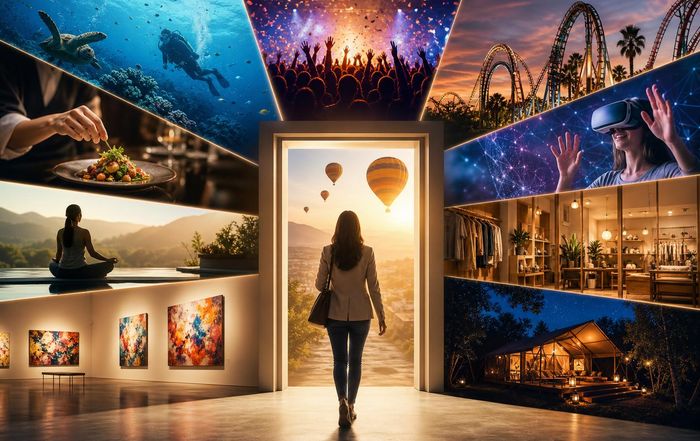
Business Opportunities in the Experience Economy
The Rise of the Experience Economy
The global business landscape has been decisively reshaped by what economists and strategists describe as the "experience economy," a structural shift in which value creation increasingly depends not on the mere delivery of products or services, but on the orchestration of memorable, emotionally resonant, and often personalized experiences that customers are willing to pay a premium for. From immersive retail environments in the United States and the United Kingdom to digitally enhanced tourism in Thailand and Italy, and from experiential banking in Singapore to hybrid workspaces in Germany and Canada, organizations across sectors are rethinking how they design, deliver, and monetize experiences as a core source of competitive advantage and long-term growth. For the active business community that turns to UpBizInfo for daily updated strategic insight, this evolution is not a passing trend but a fundamental redefinition of how business models, customer relationships, and economic value are constructed in a world where attention is scarce, expectations are elevated, and digital and physical realities are increasingly intertwined.
The concept of the experience economy was first articulated in the late 1990s, but its full economic and strategic implications have only become visible in the last decade, accelerated by rapid advances in digital technologies, shifts in consumer expectations, and the profound behavioral changes triggered by the COVID-19 pandemic and its aftermath. As organizations in North America, Europe, and Asia-Pacific have emerged from cycles of disruption, they have been forced to rethink how they engage customers, employees, and stakeholders, recognizing that experiences-whether delivered through a mobile app, a branch network, a virtual environment, or a physical venue-are now the primary arena in which loyalty is won or lost. Analysts at institutions such as the World Economic Forum have highlighted how this shift intersects with broader structural trends, including demographic change, urbanization, and the digital transformation of industries, all of which create new opportunities for businesses willing to invest in experience-led innovation and new risks for those that remain anchored in product-centric thinking. Learn more about global economic transformations at the World Economic Forum.
Defining the Experience Economy for a Global Business Audience
For business leaders in markets as diverse as the United States, Germany, Singapore, and Brazil, the experience economy can be understood as an environment in which consumers and business customers evaluate offerings not only on functional attributes such as price, quality, and reliability, but also on the holistic experience that surrounds them-encompassing emotional engagement, personalization, convenience, aesthetics, and the sense of identity or community that an interaction reinforces. This is as true for a digital banking journey in the Netherlands as it is for a luxury travel itinerary in France or a hybrid retail concept in Japan, and it challenges traditional segmentation models that focus narrowly on demographics or income levels, instead requiring a deeper understanding of motivations, aspirations, and behavioral patterns across cultures and regions. For readers of upbizinfo.com, this means that assessing business opportunities today requires an integrated view that spans core business strategy, customer experience design, technology architecture, and data capabilities, rather than treating these as separate or sequential concerns.
Research from organizations such as McKinsey & Company and Deloitte has consistently shown that companies that lead in customer experience outperform laggards on revenue growth, profitability, and shareholder returns, in part because they are better able to command premium pricing, reduce churn, and generate positive word-of-mouth in both digital and physical channels. In markets such as the United Kingdom, Sweden, and Australia, where digital adoption is high and consumers are accustomed to seamless, omnichannel experiences in sectors like e-commerce and entertainment, expectations have spilled over into traditionally conservative industries such as healthcare, insurance, and public services, forcing incumbents to raise their game or risk being displaced by more agile, experience-led challengers. Executives seeking to understand the financial implications of this shift can explore research on customer experience economics through resources such as Harvard Business Review, which has documented how experience-centric organizations systematically outperform peers across industries and geographies.
How Experience is Reshaping Key Sectors: Banking, Retail, and Travel
The banking and financial services sector illustrates perhaps more vividly than any other how the experience economy is transforming established business models across both mature and emerging markets. Traditional banks in the United States, Canada, and Europe have been forced to respond to digital-first challengers and fintech innovators that differentiate not primarily on interest rates or product breadth, but on intuitive interfaces, frictionless onboarding, real-time insights, and personalized financial guidance delivered through mobile devices and conversational interfaces. Leading institutions in markets such as Singapore, South Korea, and the Netherlands are investing heavily in experience design, data analytics, and artificial intelligence to deliver highly contextual, proactive financial experiences that anticipate customer needs rather than simply reacting to transactions. Readers seeking deeper sector-specific insights can explore dedicated coverage of banking transformation and how experiential models are redefining value in retail and corporate banking.
Retail, both online and offline, has become a primary battleground of the experience economy, as consumers increasingly expect seamless integration between digital discovery, in-store engagement, and post-purchase support. In cities like London, New York, Berlin, and Tokyo, retailers are experimenting with immersive showrooms, augmented reality fitting rooms, personalized recommendations powered by machine learning, and community-driven events that transform stores into spaces for learning and social interaction rather than mere points of sale. Global platforms such as Amazon, Alibaba, and Shopify have set new benchmarks for convenience and personalization, prompting physical retailers from France to South Africa to reimagine their value propositions around curation, storytelling, and experiential differentiation. To understand how these shifts intersect with broader market dynamics and capital flows, business readers can follow global markets coverage and analyses of retail and consumer trends from sources such as the OECD.
The travel and hospitality sector, which was severely disrupted during the pandemic years, has emerged as a powerful showcase for experience-led innovation, with travelers from Europe, Asia, and North America increasingly seeking immersive, purpose-driven, and sustainable experiences rather than standardized packages. Destinations in Italy, Spain, Thailand, and New Zealand are actively promoting cultural immersion, wellness retreats, and eco-conscious itineraries that align with growing interest in responsible tourism and authentic local engagement. Hospitality brands such as Airbnb and Marriott International have invested in platforms and partnerships that enable hosts and local providers to design distinctive experiences, from culinary workshops to adventure tours, reflecting a broader shift from selling rooms to orchestrating journeys. For a deeper understanding of travel demand patterns and international flows, business leaders can consult data from organizations such as the UN World Tourism Organization, which highlights how experiential travel is reshaping regional economies and investment priorities.
Experience as a Strategic Lever for Growth and Differentiation
For executives and founders across sectors, the most compelling aspect of the experience economy in 2026 is its role as a strategic lever that can unlock new revenue streams, strengthen competitive moats, and create more resilient customer relationships in an environment of heightened volatility and rapid technological change. In markets as diverse as the United States, Singapore, and Brazil, companies that invest in experience-led innovation are finding opportunities to move beyond transactional revenue models toward subscription, membership, and ecosystem-based approaches that monetize ongoing engagement, community participation, and access to exclusive content or services. This shift is visible in industries ranging from automotive to media and education, where organizations are reconfiguring their offerings around recurring experiential value rather than one-off sales. Business readers can explore how these strategies intersect with broader investment trends and capital allocation decisions that prioritize long-term customer lifetime value over short-term volume.
The experience economy also enables differentiation in markets where products have become commoditized and price competition erodes margins, particularly in sectors such as consumer electronics, telecommunications, and basic financial services. Companies in Germany, Japan, and South Korea, for example, are increasingly investing in post-purchase experiences such as proactive support, community forums, and upgrade pathways that deepen engagement and foster brand advocacy, recognizing that in a world of abundant choice, the quality and continuity of the experience often matter more than marginal differences in features or specifications. Strategic frameworks from organizations such as Bain & Company and Boston Consulting Group emphasize that experience-led differentiation must be grounded in clear value propositions, disciplined execution, and robust measurement, rather than superficial enhancements, and executives can explore these perspectives through platforms such as MIT Sloan Management Review, which provides in-depth analysis of customer-centric transformation.
For the readership of upbizinfo.com, many of whom are founders, investors, and senior leaders responsible for setting direction in complex, competitive environments, the critical insight is that experience should be treated not as a marketing afterthought but as a core dimension of strategy, integrated into decisions about product design, pricing, distribution, partnerships, and organizational capabilities. This strategic integration requires cross-functional collaboration between business, technology, and operations teams, as well as a willingness to invest in new skills and tools that enable continuous experimentation and learning. Readers interested in how leading organizations are implementing such transformations can consult the platform's dedicated coverage of founders and leadership strategies, which provides case-based perspectives on experience-centric business building.
Technology, AI, and Data as Experience Enablers
The maturation of digital technologies, and particularly of artificial intelligence, has been central to the acceleration of the experience economy over the past five years, enabling levels of personalization, responsiveness, and immersion that were previously unattainable. In markets such as the United States, China, and Singapore, companies are deploying AI-driven recommendation engines, predictive analytics, and conversational interfaces to tailor experiences in real time based on customer behavior, context, and preferences, whether in e-commerce, streaming media, digital banking, or healthcare. Advances in generative AI and large language models are further expanding what is possible, allowing organizations to create dynamic content, adaptive learning environments, and highly responsive support experiences at scale. Readers of upbizinfo.com seeking to understand the strategic implications of these technologies can explore dedicated coverage of artificial intelligence and automation, which examines both opportunities and governance challenges.
Data has become the foundational asset that makes experience-led strategies viable, providing the insights needed to map customer journeys, identify friction points, and test new experiential concepts across channels and touchpoints. Organizations in Europe, North America, and Asia are investing heavily in data platforms, analytics capabilities, and privacy-preserving technologies that enable them to harness behavioral, transactional, and contextual data while complying with evolving regulatory frameworks such as the EU's General Data Protection Regulation (GDPR) and emerging privacy regimes in markets like Brazil and South Africa. To navigate this complex landscape, business leaders can consult resources from authorities such as the European Commission and the OECD's digital policy programs, which provide guidance on responsible data use and cross-border data flows.
Immersive technologies such as augmented reality (AR), virtual reality (VR), and mixed reality (MR) are also beginning to play a more prominent role in the experience economy, particularly in sectors such as retail, education, manufacturing, and tourism. Companies in countries like Sweden, Finland, and South Korea are experimenting with virtual showrooms, remote collaboration environments, and digital twins that blend physical and digital experiences in ways that enhance engagement and productivity. As 5G networks and edge computing infrastructure continue to expand across regions including North America, Europe, and parts of Asia, the technical constraints that once limited immersive experiences are diminishing, opening new avenues for innovation. Business readers can track these developments through technology-focused platforms such as IEEE Spectrum, which offers detailed coverage of emerging technologies and their commercial implications.
Employment, Skills, and Organizational Culture in an Experience-Driven World
The rise of the experience economy has profound implications for employment patterns, skills development, and organizational culture in economies from the United States and Canada to India, South Africa, and Malaysia, as companies seek to build capabilities that enable them to design, deliver, and continuously improve high-quality experiences. Roles that blend creative, analytical, and technical competencies-such as experience designers, service architects, data scientists, and customer success managers-are in high demand, while frontline positions in retail, hospitality, and customer service are being redefined to emphasize empathy, problem-solving, and the ability to navigate digital tools. For readers of upbizinfo.com who are tracking labor market trends and workforce strategies, the platform's coverage of employment and jobs provides ongoing analysis of how experience-driven business models are reshaping talent needs across regions and sectors.
Hybrid and remote work models, now firmly established across much of Europe, North America, and parts of Asia-Pacific, have also created an internal experience economy within organizations, as employers compete not only on compensation but on the quality of the employee experience they offer. Companies in Germany, the Netherlands, and Australia, for example, are investing in digital collaboration platforms, flexible workspace design, and well-being programs that recognize the importance of psychological safety, inclusion, and work-life balance in attracting and retaining skilled professionals. Research from institutions such as the International Labour Organization (ILO) and the World Bank underscores how these shifts are influencing productivity, engagement, and labor participation, and business leaders can explore these perspectives through resources such as the World Bank's jobs and development portal.
For founders and executives building experience-centric businesses, organizational culture becomes a critical enabler, requiring a mindset that values experimentation, cross-functional collaboration, and a deep commitment to understanding and serving customers. This often involves rethinking performance metrics, incentives, and governance structures to reward behaviors that contribute to long-term experience quality rather than short-term volume or cost reduction alone. Platforms such as upbizinfo.com, with its integrated coverage of jobs and careers and leadership practices, provide a valuable lens on how organizations across continents are adapting their talent strategies to align with the demands of the experience economy.
Marketing, Branding, and Storytelling in the Experience Economy
Marketing and branding functions have been transformed by the rise of the experience economy, as organizations in the United States, United Kingdom, France, and beyond recognize that brand perception is increasingly shaped not by campaigns alone but by the lived experiences customers have at every touchpoint. In 2026, leading companies treat marketing as a discipline that spans the entire customer journey, from discovery and consideration through purchase, usage, and advocacy, with a focus on orchestrating coherent, emotionally resonant experiences that reinforce brand promises across channels and contexts. This requires close collaboration between marketing, product, technology, and operations teams, as well as sophisticated analytics to understand how different experiential elements contribute to outcomes such as loyalty, share of wallet, and referral behavior. For practitioners and executives seeking to deepen their understanding of this integrated approach, upbizinfo.com offers dedicated coverage of modern marketing strategies that emphasize experience as a core driver of brand equity.
Storytelling has become a critical tool in this environment, with brands across Europe, Asia, and the Americas using narrative techniques to frame experiences in ways that connect with customer values and aspirations, whether around sustainability, innovation, community, or personal growth. Companies in sectors as varied as financial services, consumer goods, and technology increasingly use content, events, and partnerships to create experiential narratives that extend beyond the functional attributes of their offerings, often leveraging influencers, creators, and user-generated content to amplify authenticity and reach. Platforms such as Think with Google provide valuable insights into how digital behavior and media consumption patterns are evolving across regions, informing how marketers design and measure experience-centric campaigns.
At the same time, the experience economy has heightened the importance of trust, transparency, and ethical conduct, as customers in markets from Switzerland to South Africa are more attuned to issues such as data privacy, environmental impact, and social responsibility. Misalignments between stated brand values and actual experiences can quickly become visible and damaging in an era of real-time social media and globalized information flows. Resources such as Edelman's Trust Barometer offer data-driven perspectives on how trust is built and eroded across countries and industries, reinforcing the imperative for organizations to ensure that their experiential strategies are grounded in genuine commitments and responsible practices.
Sustainability, Ethics, and the Future of Experiential Value
As the experience economy matures, questions of sustainability and ethics are moving to the forefront, particularly in regions such as Europe, Scandinavia, and parts of Asia where regulatory frameworks and consumer expectations are increasingly aligned around environmental and social responsibility. Experiences that generate excessive waste, carbon emissions, or social exclusion are coming under greater scrutiny, prompting companies in sectors such as travel, events, and retail to redesign offerings in ways that minimize negative externalities while still delivering memorable value. For loyal subscribers and also new readers of UpBizInfo who are tracking the intersection of sustainability and business innovation, the platform's dedicated coverage of sustainable business practices provides ongoing analysis of how organizations are integrating environmental, social, and governance (ESG) considerations into experience design and delivery.
Global initiatives such as the United Nations Sustainable Development Goals (SDGs) provide a framework for aligning experiential business models with broader societal objectives, encouraging companies in markets from Norway and Denmark to Japan and Brazil to consider how their experiences contribute to outcomes such as inclusive growth, reduced inequalities, and climate action. Business leaders can explore these frameworks and their implications through resources such as the UN SDG Knowledge Platform, which highlights best practices and cross-sector collaborations that connect experiential innovation with sustainable development. At the same time, regulatory developments around greenwashing, consumer protection, and digital rights in regions such as the European Union and North America are raising the stakes for accurate communication and responsible design, reinforcing the need for robust governance and oversight.
Looking ahead, the future of the experience economy is likely to be shaped by the convergence of multiple forces: continued advances in AI and immersive technologies, evolving societal values around sustainability and well-being, demographic shifts in regions such as Asia and Africa, and the ongoing reconfiguration of global supply chains and trade patterns. For the globally oriented audience of upbizinfo.com, which spans investors, founders, policymakers, and senior executives from North America, Europe, Asia, and emerging markets, the central challenge and opportunity is to anticipate how these dynamics will redefine what customers, employees, and communities expect from organizations, and to position their strategies accordingly. By integrating 100% unique insights across economy, world affairs, technology, and sector-specific developments, the platform aims to equip decision-makers with the perspective needed to navigate and capitalize on the experience economy's next phase.
Business opportunities in the experience economy are not confined to any single region or sector; they are emerging wherever organizations are willing to rethink how they create value, build trust, and foster meaningful connections in a world where experiences, more than products alone, define the contours of economic and competitive success.