

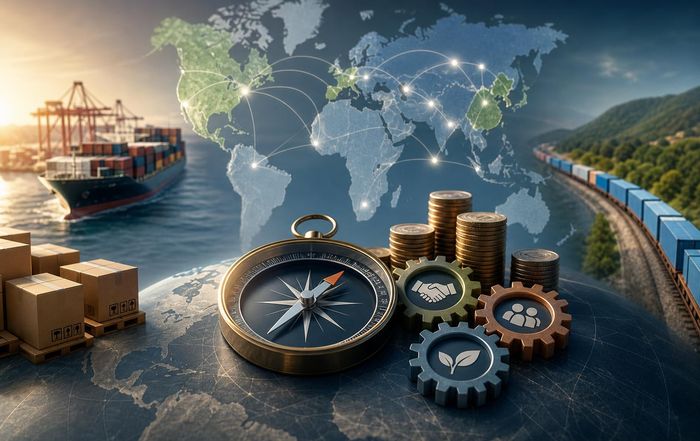
Supply Chain Friendshoring: Costs, Trade-Offs, and What Comes Next
Friendshoring has moved from policy speeches into boardroom agendas. As geopolitical risk, sanctions, and trade tensions reshape global commerce, companies are being pushed-by governments, investors, and their own risk models-to rethink the old model of "produce wherever is cheapest." Instead, many are exploring production and sourcing in "friendly" or "like-minded" countries, even when that comes at a higher price.
This shift has implications for costs, competitiveness, and economic geography. It is not simply a matter of moving a factory from one country to another; it affects capital allocation, labor markets, technology transfer, and long-term strategy. For executives, investors, and policymakers, understanding the real costs and trade-offs of friendshoring is becoming a core strategic concern, not a niche policy debate.
What "Friendshoring" Actually Means
Friendshoring (sometimes called "ally-shoring") refers to restructuring supply chains so that critical production and sourcing occur primarily in countries considered politically and strategically aligned. The concept gained prominence after remarks by U.S. Treasury Secretary Janet Yellen in 2022, who argued that relying heavily on "countries where we have geopolitical tensions and do not share values" created unacceptable vulnerabilities in areas such as semiconductors, batteries, and critical minerals.
Unlike traditional offshoring, which focuses almost entirely on cost, friendshoring explicitly factors in political alignment, security cooperation, and adherence to shared rules or norms. It is closely related to reshoring (bringing production back home) and nearshoring (moving production closer geographically), but it is not identical to either. Production might move from China to Vietnam or Mexico, from Russia-linked sources to Canada or Norway, or from global spot markets to trusted regional partners.
Institutions such as the International Monetary Fund and World Trade Organization have warned that excessive fragmentation of global trade into competing blocs could undermine global growth. At the same time, security-focused agencies and alliances like NATO and the OECD have highlighted the risks of over-dependence on geopolitical rivals for energy, technology, and critical inputs. Friendshoring sits at the intersection of these concerns, promising resilience but raising questions about cost and efficiency.
For businesses already tracking global trade and economic trends, friendshoring is no longer theoretical; it is shaping investment decisions in manufacturing, logistics, and technology across sectors from automotive to pharmaceuticals.
Why Friendshoring Is Gaining Momentum
Several overlapping drivers explain why friendshoring has moved rapidly from policy rhetoric to corporate strategy.
The COVID-19 pandemic exposed the fragility of globally dispersed supply chains. Lockdowns in one region could halt production worldwide, while shortages of relatively low-cost components like microcontrollers shut down high-value industries such as automotive manufacturing. Subsequent disruptions in shipping, container availability, and port congestion further underlined the risks of ultra-lean, hyper-globalized supply chains.
Geopolitical tensions have intensified these concerns. Trade disputes between the United States and China, sanctions following Russia's invasion of Ukraine, and export controls on advanced technologies have all made it riskier to rely on single-country sourcing, especially from states that might become subject to sanctions or export bans. Governments in major economies have responded with industrial policies and incentives for domestic and allied production, particularly in semiconductors, batteries, and clean energy components. Examples include the U.S. CHIPS and Science Act, the EU Chips Act, and various national subsidy programs in Asia and Europe.
At the same time, corporate risk frameworks and ESG expectations have evolved. Investors and boards now scrutinize supply chain concentration, human-rights risks, and exposure to sanctions or export controls more closely. Major consultancies such as McKinsey & Company and Boston Consulting Group have published analyses showing that extreme supply chain concentration can wipe out years of cost savings in a single disruption event. This has encouraged firms to consider diversification and friendshoring as a form of strategic insurance-even if it raises unit costs.
For readers following global markets and business strategy, friendshoring represents a shift from pure cost optimization toward a more complex balancing of resilience, security, and competitiveness.
Direct Cost Implications: Labor, Capital, and Operating Expenses
The most immediate impact of friendshoring is on cost. Moving production from the lowest-cost location to a higher-cost but politically aligned country changes the economics of everything from unit labor costs to capital investment and overhead.
Labor is usually the most visible factor. Many friendshoring destinations-such as Mexico, Poland, or Malaysia-are still relatively cost-competitive, but they often cannot match the lowest wages in legacy offshore hubs. Data from organizations like the International Labour Organization and World Bank show that hourly manufacturing wages in key friendshoring destinations are typically higher than in the very lowest-cost countries, though still well below advanced-economy levels. For labor-intensive industries such as textiles, basic electronics assembly, or toys, even small wage differences can significantly affect margins.
Capital expenditures also rise when firms build new facilities in friendshoring locations. Greenfield investments in factories, warehouses, and logistics hubs require substantial up-front spending, especially if companies aim to meet stricter environmental and labor standards. While some of this cost may be offset by government incentives-subsidies, tax credits, or low-interest financing-firms still face higher capital intensity per unit of output compared with simply expanding existing low-cost plants.
Operating expenses extend beyond wages and capex. Energy prices, regulatory compliance, environmental standards, and local infrastructure quality all influence ongoing costs. In some friendshoring destinations, energy may be more expensive or less reliable than in established manufacturing hubs, requiring backup systems or additional investment in efficiency. Conversely, companies may benefit from modern ports, better digital infrastructure, or reduced corruption, which can partially offset higher direct costs.
These trade-offs are particularly visible in sectors such as semiconductors, where friendshoring efforts backed by governments in the United States, Europe, South Korea, and Japan aim to reduce dependence on a small number of East Asian producers. Semiconductor fabs are among the most capital-intensive facilities in the world, and building redundant capacity in multiple "friendly" locations is inherently expensive. Yet governments and companies are betting that the cost of not doing so-measured in potential production shutdowns and national security risks-is higher.
For companies evaluating these moves, friendshoring decisions intersect with broader investment and markets strategies, not just procurement and operations.
Hidden and Indirect Costs: Complexity, Talent, and Coordination
Beyond visible line items, friendshoring introduces more subtle costs that can be easy to underestimate. These often arise from increased complexity, talent constraints, and the need to rebuild supplier ecosystems from scratch.
Supply chain complexity tends to increase when production is fragmented across multiple "friendly" jurisdictions. Firms must manage more suppliers, more regulatory regimes, and more cross-border flows. This can require expanded procurement teams, more sophisticated digital tracking tools, and additional legal and compliance support. Organizations like KPMG, Deloitte, and PwC have highlighted in their advisory work that clients often underestimate the overhead associated with managing multi-country supply networks, especially when they involve sensitive technologies subject to export controls.
Talent availability is another critical factor. Moving production to a new location is not only about factories and equipment; it requires engineers, technicians, managers, and a skilled workforce. Some friendshoring destinations have limited pools of specialized talent, particularly in advanced manufacturing. Companies may need to invest heavily in training, partner with local universities, or relocate experienced staff from other regions. This can slow ramp-up times and add relocation, housing, and integration costs.
Rebuilding supplier ecosystems is perhaps the most underestimated challenge. In established manufacturing hubs, decades of clustering have created dense networks of component suppliers, tooling providers, logistics firms, and service vendors. When production moves, these networks do not simply reappear. Firms may find that critical subcomponents or materials are still produced in non-friendly countries, undermining the very goal of friendshoring. Achieving true supply chain realignment often requires co-locating or developing a whole chain of upstream and downstream partners.
For businesses already grappling with employment and skills challenges, friendshoring can intensify competition for specialized labor in both origin and destination countries, raising wages and complicating workforce planning.
Strategic Benefits: Resilience, Security, and Policy Alignment
Despite higher and more complex costs, friendshoring offers strategic benefits that many firms and governments increasingly view as non-negotiable. These benefits are harder to quantify than wage differentials, but they can be decisive in crisis scenarios.
Resilience is the most cited advantage. By diversifying production across multiple friendly countries, firms reduce their exposure to single-point failures-whether from pandemics, natural disasters, political upheaval, or sanctions. Organizations such as the World Economic Forum have emphasized that resilient supply chains are not necessarily the cheapest, but they are better able to absorb shocks and recover quickly. For sectors like pharmaceuticals, medical equipment, or critical infrastructure components, this resilience has direct implications for public health and national security.
Security and geopolitical alignment are closely related. Governments in major economies have become more wary of dependence on strategic competitors for technologies like 5G equipment, AI-enabling hardware, and advanced chips. Agencies such as the U.S. Department of Commerce and the European Commission have implemented export controls and screening mechanisms that make it riskier to rely on suppliers in certain jurisdictions. Friendshoring allows firms to reduce the probability that their supply chains will be suddenly disrupted by new restrictions or geopolitical escalation.
Policy alignment can translate into financial incentives. Many friendshoring moves are supported by generous subsidies, tax breaks, and grants. National development banks, export-credit agencies, and supranational bodies like the European Investment Bank often support projects that enhance strategic autonomy or align with climate and industrial policy goals. These incentives can partially offset higher operating costs and make friendshoring investments more palatable to shareholders.
There is also a reputational and ESG dimension. Sourcing from countries with stronger labor protections, environmental standards, and governance frameworks can reduce the risk of scandals related to forced labor, unsafe working conditions, or environmental damage. As ESG reporting frameworks from bodies like the Global Reporting Initiative and Sustainability Accounting Standards Board gain traction, boards and investors increasingly view supply chain alignment with "friendly" jurisdictions as a component of responsible business practice.
For companies already investing in sustainable business models, friendshoring can dovetail with broader efforts to improve traceability, reduce carbon intensity, and strengthen governance across the value chain.
Trade-Offs for Businesses: Competitiveness, Scale, and Innovation
The core dilemma of friendshoring is balancing resilience and security against cost and competitiveness. This trade-off plays out differently across sectors and firm sizes.
For cost-sensitive consumer industries-such as apparel, low-end electronics, and basic household goods-friendshoring can erode thin margins and force price increases. If competitors continue to source from lower-cost, non-friendly countries, early adopters of friendshoring may find themselves at a price disadvantage. This risk is particularly acute for small and medium-sized enterprises that lack the bargaining power to negotiate favorable terms with new suppliers or to secure government incentives.
Scale is another concern. Some friendshoring destinations simply cannot yet match the production capacity and ecosystem depth of long-established hubs. This can limit the ability of firms to ramp up quickly or to benefit from large-scale economies. In industries such as automotive components or consumer electronics, where volumes are high and product cycles are short, this limitation can be significant.
Innovation and technology transfer present more nuanced trade-offs. On one hand, building advanced manufacturing capacity in friendly countries can stimulate innovation ecosystems, foster collaboration with local universities, and create new clusters of expertise. On the other hand, fragmenting global production can slow the diffusion of best practices and technologies, especially if geopolitical tensions restrict cross-border R&D collaboration. Institutions like the OECD have warned that excessive techno-nationalism could hinder global innovation.
Firms must also consider the opportunity cost of capital. Money spent on building redundant or friendshored capacity is money not spent on other strategic priorities such as digital transformation, AI adoption, or new product development. For companies already under pressure to invest in technology and AI to remain competitive, friendshoring can strain balance sheets and force difficult prioritization decisions.
In practice, many companies are adopting hybrid strategies: maintaining some production in traditional low-cost hubs while building additional capacity in friendly locations, often for higher-value or more sensitive products. This multi-track approach aims to preserve cost advantages while creating a "safety valve" in case of disruption.
Trade-Offs for Countries: Growth, Alliances, and Fragmentation
The costs and trade-offs of friendshoring are not limited to companies; they also reshape the economic prospects of countries on both sides of the shift.
For advanced economies and close allies, friendshoring can bring investment, jobs, and technological upgrading. Countries like Mexico, India, Vietnam, Poland, and several Southeast European states have positioned themselves as alternative manufacturing hubs for firms seeking to diversify away from traditional centers. Governments promote friendshoring as a way to climb up the value chain, attract foreign direct investment, and deepen ties with major markets.
However, these benefits come with expectations. Host countries may be asked to align their regulatory frameworks, data rules, and foreign policy stances more closely with those of their primary partners. This can constrain foreign policy autonomy and complicate relationships with other major powers. For smaller economies, over-reliance on a single bloc or anchor country can introduce its own vulnerabilities.
For countries losing investment due to friendshoring, the consequences can be severe. Reduced foreign direct investment, job losses in export-oriented sectors, and slower productivity growth can all follow from large-scale supply chain realignments. Institutions like the World Bank and IMF have highlighted the risk that low-income and emerging economies could be "left behind" if global trade fragments into competing regional blocs. This could exacerbate inequalities between countries and reduce the developmental benefits of trade.
At the global level, friendshoring can contribute to economic fragmentation. If trade and investment flows become increasingly shaped by geopolitical alliances rather than comparative advantage, efficiency losses are likely. The World Trade Organization has warned that a world split into rigid trading blocs could see significant long-term reductions in global GDP compared with a more integrated system. While some degree of diversification and security-driven realignment is understandable, extreme fragmentation risks undermining the benefits of decades of trade liberalization.
For observers tracking world economic and political developments, friendshoring is a key mechanism through which great-power competition is reshaping globalization itself.
Sector-by-Sector Differences: Not All Supply Chains Are Equal
Friendshoring does not affect all industries in the same way. The balance of costs and benefits depends heavily on the nature of the product, the structure of the value chain, and the degree of strategic sensitivity.
In semiconductors, batteries, and other high-tech components, friendshoring is driven primarily by security and strategic concerns. Governments view dependence on a small number of potentially vulnerable suppliers as unacceptable. The result is a wave of state-backed investment in new fabs and gigafactories in the United States, Europe, Japan, and allied countries in Asia. Costs are high, but so are the perceived risks of inaction.
In pharmaceuticals and medical equipment, the pandemic highlighted the danger of over-reliance on a few manufacturing centers for active pharmaceutical ingredients and key medical supplies. Friendshoring in this sector often focuses on building regional production hubs and stockpiles to ensure continuity of supply during crises. Regulatory harmonization efforts, such as those coordinated by the World Health Organization, can support this process but also add layers of compliance.
In automotive and consumer electronics, friendshoring is more about diversification and risk management than outright decoupling. Firms seek to maintain access to large existing ecosystems while adding capacity in friendly or nearby countries. For example, automakers might continue sourcing some components from long-established hubs while building new assembly plants closer to major markets to reduce logistics risk and respond faster to demand.
In basic consumer goods and low-margin manufacturing, friendshoring is less pronounced, partly because the cost penalties are harder to absorb and the security rationale is weaker. However, reputational and ESG concerns-such as labor standards and environmental impacts-can still drive some sourcing shifts toward countries with stronger governance, especially for brands targeting premium or sustainability-conscious consumers.
Understanding these sectoral nuances is critical for investors, policymakers, and professionals in jobs and employment markets who are trying to anticipate where opportunities and dislocations will emerge.
Managing the Trade-Offs: Practical Strategies for Companies
For businesses, the question is not whether friendshoring is "good" or "bad" in the abstract, but how to manage its trade-offs in a way that aligns with their risk tolerance, strategic priorities, and financial constraints. Several practical approaches have emerged.
First, many firms are moving from single-source to multi-source strategies, building supplier portfolios that include both traditional low-cost providers and friendshored alternatives. This allows them to maintain cost competitiveness while having backup options in case of disruption or policy change. The key challenge is managing complexity and ensuring that alternative suppliers can ramp up quickly when needed.
Second, companies are investing in digital visibility and analytics across their supply chains. Tools that map supplier networks, track geopolitical risk, and model disruption scenarios can help quantify the value of resilience versus cost. Technology providers and consultancies emphasize that friendshoring decisions should be grounded in data rather than driven solely by headlines or political pressure.
Third, firms are engaging more deeply with governments and industry associations to shape policy frameworks and access incentives. In sectors affected by industrial policies, early engagement can help companies secure favorable terms, influence regulatory design, and avoid being blindsided by new requirements. Trade and industry bodies, as well as multilateral organizations like the World Economic Forum, provide platforms for such dialogue.
Fourth, organizations are rethinking inventory and production strategies. Instead of relying exclusively on just-in-time models, some are adopting "just-in-case" buffers for critical components, especially those sourced from non-friendly jurisdictions. Friendshored production can be prioritized for high-margin or strategically important products, while lower-risk or commoditized items may continue to be sourced globally.
Finally, companies are integrating friendshoring considerations into broader corporate strategy, including M&A, R&D, and marketing. Supply chain location is no longer a purely operational decision; it affects brand positioning, customer perception, and long-term innovation pathways.
How Friendshoring Might Evolve
Friendshoring is still in flux. Its long-term shape will depend on geopolitical developments, technological change, and policy choices in major economies.
One possibility is the emergence of overlapping "trusted networks" rather than rigid blocs. Companies might maintain diversified sourcing that includes both friendly and neutral countries, with stricter controls only for the most sensitive technologies and materials. This would preserve some efficiency benefits of globalization while addressing the most acute security concerns.
Another likely development is greater regionalization. North America, Europe, and parts of Asia may each develop more self-contained supply networks for critical sectors, supported by regional trade agreements and infrastructure investments. This could benefit countries able to position themselves as regional hubs, but it may also marginalize states that fall outside these networks.
Technology could also reshape the calculus. Advances in automation, robotics, AI, and additive manufacturing reduce the relative importance of labor cost in some industries. As capital and technology become more important than cheap labor, friendshoring to higher-wage but politically aligned countries may become more economically viable. However, this same automation may limit the job-creation benefits that host countries expect from friendshoring.
Finally, the political narrative around globalization is evolving. If voters and policymakers in major economies continue to prioritize resilience, national security, and industrial policy, friendshoring will likely remain a central feature of the global economy. If, instead, there is a renewed push for multilateralism and rules-based trade-supported by institutions like the World Trade Organization-friendshoring could become more targeted and less sweeping.
For business leaders, investors, and policymakers, the key is to treat friendshoring not as a one-off reaction to recent crises, but as part of a broader reconfiguration of global production. Those who understand its costs and trade-offs, and who build flexible strategies accordingly, will be better placed to navigate whatever form the next phase of globalization takes.