

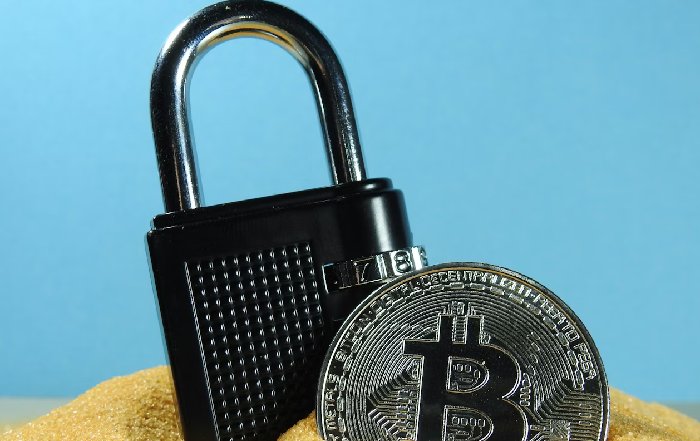
Protecting Your Crypto Assets: A Security Guide for Investors
Digital assets have moved decisively from the fringes of finance into the mainstream, with institutional portfolios, family offices, and retail investors across North America, Europe, Asia, and beyond all holding exposure to cryptocurrencies and tokenized assets. As upbizinfo.com tracks daily developments across crypto, markets, investment, and technology, one theme has become unavoidably clear: returns may attract investors, but security ultimately determines whether those returns can be preserved. This article examines, from a global and business-focused perspective, how serious investors in the United States, United Kingdom, Germany, Canada, Australia, Singapore, Japan, South Korea, South Africa, Brazil, and other key markets can protect their crypto assets in 2026, combining technical best practices with governance, legal, and operational safeguards that reflect the maturing nature of the digital asset ecosystem.
The New Reality of Crypto Risk in a Mature Market
Digital asset markets have evolved from the speculative fervor of the late 2010s into a more structured environment, yet the sophistication of attackers has grown just as rapidly, with organized cybercrime groups, advanced phishing operations, and state-linked threat actors all targeting crypto holders. Reports from organizations such as Chainalysis and Elliptic have shown that while the share of illicit activity as a percentage of total transaction volume has decreased, the absolute value of stolen assets remains substantial, underlining that investors must treat crypto security as a core element of their overall risk management strategy rather than an afterthought. Investors who follow developments on business strategy and risk increasingly recognize that crypto asset protection now intersects with broader topics such as operational resilience, regulatory compliance, and even reputational risk, particularly for corporate treasuries and funds that disclose digital asset holdings to stakeholders.
The global regulatory environment has also become more assertive, with guidance from bodies such as the Financial Action Task Force (FATF) and national regulators in the United States, the European Union, the United Kingdom, Singapore, and Japan emphasizing the need for robust custody and security arrangements. Investors who wish to understand the evolving macro and policy backdrop can explore wider economic and regulatory trends, yet at the operational level, they must translate these expectations into concrete practices, from wallet management to incident response planning.
Understanding the Threat Landscape Facing Crypto Investors
Any credible security strategy begins with a clear understanding of the threats it is designed to mitigate, and in the context of digital assets, these threats span both technical and human dimensions. On the technical side, vulnerabilities in smart contracts, bridges, and decentralized finance protocols have led to high-profile exploits, as documented by research from sources such as the MIT Digital Currency Initiative, while weaknesses in centralized infrastructure, such as exchanges and custodians, have resulted in breaches exposing user funds and personal data. On the human side, social engineering remains one of the most effective attack vectors, with sophisticated phishing, spear-phishing, and impersonation campaigns targeting investors across email, messaging apps, and social platforms.
Investors seeking a deeper understanding of cybersecurity fundamentals can refer to resources such as the U.S. Cybersecurity and Infrastructure Security Agency (CISA), which provides guidance on topics like multi-factor authentication and password hygiene that are directly applicable to crypto security. At the same time, the global nature of digital assets means that investors in Europe, Asia, and other regions must also be aware of local threat patterns, including region-specific scams and fraudulent investment schemes, many of which are tracked by regulators like the UK Financial Conduct Authority (FCA) and the Monetary Authority of Singapore (MAS), whose investor alerts highlight the importance of verifying the legitimacy of platforms and service providers before entrusting them with funds.
Custody Choices: Self-Custody, Third-Party Custody, and Hybrid Models
One of the most important strategic decisions for any crypto investor is the choice of custody model, which fundamentally shapes the risk profile of their holdings. Self-custody, where the investor controls the private keys directly through hardware wallets or secure software solutions, offers maximum sovereignty but also maximum responsibility, as the loss or compromise of keys typically cannot be reversed. Reputable hardware wallet manufacturers, often scrutinized by security researchers and communities such as Bitcoin.org and the Ethereum Foundation, have improved usability and security, yet they still require disciplined key management practices that many retail and even some institutional investors struggle to maintain consistently.
Third-party custody, whether through regulated exchanges, specialist custodians, or banks, can provide institutional-grade security infrastructure, insurance coverage, and compliance capabilities, which is why many professional investors and corporate treasuries opt for this route. Organizations such as Coinbase Custody, Fidelity Digital Assets, and Anchorage Digital have positioned themselves as institutional custodians, often operating under banking or trust charters in jurisdictions like the United States and Europe, and their security architectures typically include multi-signature arrangements, hardware security modules, and geographically distributed cold storage. For investors who wish to align their crypto strategy with broader corporate governance and banking relationships, these providers can be attractive, though they introduce counterparty risk that must be evaluated carefully.
Hybrid models, where a portion of assets is self-custodied while another portion is held with professional custodians or exchanges, are increasingly popular among sophisticated investors who wish to balance control, liquidity, and security. This approach allows for operational flexibility, such as keeping trading capital in hot or warm wallets while storing long-term holdings in deep cold storage, and it aligns with best practices observed in traditional finance, where diversification of custodial arrangements is common. As upbizinfo.com engages with founders, asset managers, and family offices on investment strategy, it is clear that the most resilient portfolios treat custody as a layered system rather than a single point of failure.
Wallet Security: Hardware, Software, and Key Management Discipline
At the heart of crypto asset security lies the management of private keys, and in 2026, the tools available to investors have matured significantly, yet the underlying principles remain unchanged: whoever controls the private key controls the asset. Hardware wallets from established providers, which store keys in isolated secure elements and sign transactions offline, remain the gold standard for long-term storage, particularly when combined with passphrase protection and careful physical security. Guidance from organizations like the Electronic Frontier Foundation (EFF) and the Center for Internet Security (CIS) underscores the importance of secure device configuration, regular firmware updates from official sources, and the avoidance of tampered or second-hand devices, which can be preloaded with malware or compromised firmware.
Software wallets, whether on desktop or mobile, have improved in security through features such as biometric access, encrypted key storage, and integration with secure enclaves on modern smartphones, but they remain more exposed to malware, keyloggers, and device theft, particularly in regions with high rates of cybercrime. Investors in markets such as Brazil, South Africa, and parts of Southeast Asia, where mobile-first adoption is strong, must pay particular attention to device-level security, including operating system updates, app permissions, and the avoidance of unofficial app stores. For those who wish to understand how wallet security intersects with broader technology and lifestyle choices, it becomes clear that personal digital hygiene is now a financial imperative, not merely a privacy concern.
Key management discipline extends beyond the choice of wallet to the processes around backup, recovery, and inheritance planning, which are often neglected until a crisis occurs. Seed phrases, typically 12 or 24 words, must be stored offline in secure, durable forms, with some investors using metal backup plates designed to withstand fire and water damage, while others implement geographically distributed storage across trusted jurisdictions. Resources from organizations like the National Institute of Standards and Technology (NIST) provide valuable frameworks on cryptographic key management, which can be adapted to the specific needs of crypto investors, especially those managing multi-signature arrangements or institutional accounts with multiple signers and approval workflows.
Defending Against Social Engineering and Phishing Attacks
Despite advances in wallet and infrastructure security, many successful crypto thefts in 2024 and 2025 have originated not from technical exploits but from social engineering, where attackers manipulate individuals into revealing credentials, signing malicious transactions, or installing compromised software. Phishing emails that mimic well-known exchanges, wallets, or even regulators have become highly sophisticated, often exploiting localized language, cultural cues, and current events in markets such as the United States, Germany, France, and Japan to appear credible. Security awareness training, long a staple of corporate cybersecurity programs, is now essential for anyone managing significant crypto holdings, whether as an individual investor, a family office, or a corporate treasury function.
Organizations such as Europol and INTERPOL have repeatedly warned that cross-border crypto scams are on the rise, leveraging social media, messaging apps, and even deepfake technology to impersonate executives, influencers, or support staff. Investors can improve their resilience by adopting a strict verification culture, where any request involving funds or keys is independently confirmed through out-of-band channels, and by maintaining a clear separation between public-facing identities and operational accounts. For business leaders who follow employment and organizational trends, incorporating crypto-specific awareness into employee training is becoming a necessary step, particularly in companies that accept digital assets, pay contractors in crypto, or hold tokens on their balance sheets.
Choosing Secure Exchanges and Service Providers
For many investors, especially in regions like the United States, United Kingdom, Singapore, and Australia, centralized exchanges, brokers, and fintech platforms remain the primary gateway into digital assets, which makes the selection and ongoing monitoring of these providers a critical security decision. Evaluating the robustness of an exchange's security posture involves reviewing not only its technical controls but also its regulatory status, insurance arrangements, transparency practices, and track record in handling incidents. Reputable platforms often undergo third-party security audits, publish proof-of-reserves attestations, and maintain clear disclosures about custody arrangements, while less reliable operators may lack such transparency or operate from opaque jurisdictions.
Regulators such as the U.S. Securities and Exchange Commission (SEC) and the European Securities and Markets Authority (ESMA) have increased scrutiny of crypto service providers, and investors can use public enforcement actions and warning lists as indicators of potential red flags. Independent research from organizations like CryptoCompare and educational initiatives such as Investopedia's digital asset guides can also help investors differentiate between reputable platforms and those that present excessive risk. As upbizinfo.com covers news and regulatory developments across global markets, it is evident that due diligence on service providers is no longer optional; it is a core component of any responsible investment strategy in digital assets.
Integrating Crypto Security into Broader Investment Governance
For institutional investors, high-net-worth individuals, and founders whose ventures hold tokens or stablecoins, crypto security cannot be treated as an isolated technical issue; it must be embedded into overall investment governance, risk management, and internal control frameworks. This includes defining clear policies on who can authorize transactions, how large transfers are approved, and what thresholds trigger additional verification or multi-signature approvals. Traditional frameworks from organizations such as the Committee of Sponsoring Organizations of the Treadway Commission (COSO) and the International Organization for Standardization (ISO), particularly ISO 27001 for information security, are increasingly being adapted to cover digital asset operations, ensuring that crypto holdings are subject to the same rigor as other financial assets.
Family offices and corporate treasuries in hubs such as New York, London, Frankfurt, Zurich, Singapore, and Hong Kong are formalizing crypto-specific investment committees, which oversee not only portfolio allocation but also custody arrangements, counterparty selection, and incident response planning. These developments mirror trends observed by upbizinfo.com in the broader world of founders and high-growth companies, where governance is recognized as a competitive advantage that can reassure investors, regulators, and partners. Embedding crypto security into investment charters, board reporting, and audit processes ensures that it receives sustained attention rather than episodic focus only after market turmoil or high-profile breaches.
Regulatory, Tax, and Legal Dimensions of Crypto Protection
Protecting crypto assets is not solely about preventing theft or loss; it also involves managing regulatory, tax, and legal risks that can erode value or create liabilities if not addressed proactively. Regulatory frameworks differ across jurisdictions, with the European Union's Markets in Crypto-Assets (MiCA) regime, U.S. guidance from agencies such as the Internal Revenue Service (IRS) and Commodity Futures Trading Commission (CFTC), and national regulations in countries like Japan, South Korea, and Brazil imposing various obligations on investors and service providers. Non-compliance can lead to fines, forced liquidations, or restrictions on access to platforms, which in turn can impact liquidity and portfolio strategy.
Tax authorities worldwide increasingly expect detailed reporting of crypto transactions, capital gains, staking rewards, and decentralized finance income, and failure to maintain accurate records can result in penalties or disputes. Professional investors are therefore integrating specialized tax and legal advice into their crypto strategy, often working with firms that combine expertise in both digital assets and traditional finance. Resources such as the Organisation for Economic Co-operation and Development (OECD)'s work on crypto-asset reporting frameworks provide insight into the direction of travel, particularly for cross-border investors. For readers of upbizinfo.com who follow global economic and policy shifts, it is clear that regulatory clarity, while sometimes burdensome, can also enhance trust and institutional participation, ultimately supporting more sustainable growth in the digital asset ecosystem.
Building Organizational and Personal Resilience Around Crypto
In addition to technical controls and governance frameworks, resilient crypto investors in 2026 are paying close attention to human factors, operational continuity, and long-term planning, recognizing that wealth preservation in digital assets is a multi-decade challenge rather than a short-term trading problem. This includes planning for scenarios such as incapacitation, succession, and cross-border relocation, where access to wallets, seed phrases, and custody accounts must be maintained securely yet flexibly. Legal instruments such as wills, trusts, and corporate structures are being updated to explicitly cover digital assets, with guidance from professional bodies like the American Bar Association (ABA) and similar organizations in Europe and Asia, ensuring that heirs and beneficiaries can access holdings without compromising security while the original owner is alive.
From an employment and organizational standpoint, companies that integrate crypto into their operations, whether through payroll, customer payments, or treasury management, must ensure that knowledge is not concentrated in a single individual whose departure or unavailability could paralyze access to critical funds. Cross-training, documented procedures, and controlled role-based access to wallets and custody systems are becoming standard practices, aligning with broader trends in jobs and future-of-work transformations that emphasize resilience and knowledge distribution. For individual investors, personal resilience also involves maintaining psychological discipline in volatile markets, avoiding impulsive actions in response to price swings or sensational news, and adhering to pre-defined security protocols even when under pressure.
Sustainability, ESG, and the Long-Term Future of Secure Digital Assets
As institutional investors across Europe, North America, and Asia embed environmental, social, and governance (ESG) considerations into their portfolios, the intersection of crypto security and sustainability is gaining prominence, particularly in discussions about responsible innovation and long-term value creation. The energy consumption of proof-of-work networks, the social implications of financial inclusion through digital assets, and the governance of decentralized protocols all influence how investors perceive risk and opportunity in this space. Organizations such as the World Economic Forum (WEF) and the International Monetary Fund (IMF) have published analyses on the systemic implications of digital assets, highlighting that robust security is a prerequisite for realizing their potential benefits without amplifying systemic vulnerabilities.
For readers of upbizinfo.com who are exploring sustainable business and investment practices, secure digital asset management is now part of a broader conversation about resilient, transparent, and ethically grounded financial systems. Investors who adopt best-in-class security practices, engage constructively with regulators, and support responsible innovation in custody, identity, and risk management contribute not only to their own protection but also to the credibility and stability of the entire ecosystem. In parallel, advances in technologies such as zero-knowledge proofs, secure multi-party computation, and decentralized identity, often discussed in leading research hubs and at organizations like the Linux Foundation and Hyperledger, are opening new possibilities for privacy-preserving, compliant, and secure digital asset infrastructures that may reshape how investors approach custody and risk over the coming decade.
How Latest Business Information Helps Investors Navigate the Security Landscape
As digital assets continue to integrate into mainstream portfolios from New York to London, Berlin to Singapore, and São Paulo to Johannesburg, upbizinfo positions itself as a trusted companion for investors and business leaders seeking to navigate both opportunity and risk. By connecting developments across AI and automation, banking innovation, crypto markets, global economic shifts, and emerging technologies, the platform provides context that helps readers understand not only how to protect their crypto assets today but also how the broader financial and technological landscape is evolving.
In 2026, protecting crypto assets is no longer a niche technical concern; it is a central pillar of modern wealth management and corporate finance, demanding the same rigor, governance, and strategic foresight that investors apply to traditional asset classes. Whether an investor is a founder in Berlin allocating part of a company treasury to stablecoins, a family office in Toronto diversifying into tokenized real-world assets, or a retail investor in Bangkok building a long-term digital asset portfolio, the principles remain consistent: understand the threat landscape, choose custody models deliberately, secure wallets and keys with discipline, defend against social engineering, vet service providers rigorously, integrate crypto into broader governance and compliance frameworks, and plan for resilience over decades rather than months.
By continuously monitoring global developments, synthesizing insights from regulators, technologists, and market participants, and presenting them in a business-focused, actionable format, upbizinfo.com aims to help investors convert knowledge into robust practice. In doing so, it supports a future where digital assets can fulfill their potential as part of a more open, efficient, and innovative financial system, without sacrificing the security, trust, and stability that serious investors in every region of the world rightly demand.