

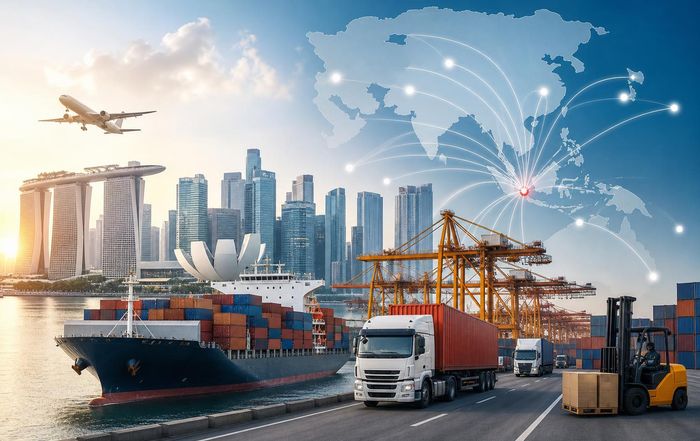
How Singapore's Trade Hub Powers Regional Distribution in Asia
Singapore's rise from a small entrepôt to a highly orchestrated trade hub has reshaped how goods move across Asia and beyond. For manufacturers, e-commerce platforms, logistics providers, and investors, the city-state is no longer just a convenient port of call; it is the operating system behind many regional distribution strategies. Understanding how this system works-across infrastructure, policy, technology, and finance-helps explain why so many global supply chains are routed through Singapore and what that means for businesses planning their next move in Asian markets.
Why Singapore Matters So Much to Regional Trade
Singapore sits at the crossroads of major east-west and north-south shipping lanes, close to the Malacca Strait, through which an estimated one-quarter of global traded goods pass. Geography, however, is only part of the story. The country has systematically built an ecosystem of ports, airports, free trade agreements, logistics services, and financial markets that turn location into leverage.
The Maritime and Port Authority of Singapore (MPA) reports consistently high container throughput at Port of Singapore, often vying with major Chinese ports for the top global ranking. The port functions as a key transshipment hub, where containers are consolidated, split, and redirected to secondary ports across Southeast Asia, South Asia, and Oceania. This is crucial for regional distribution: many smaller markets do not justify direct deep-sea calls, so Singapore serves as the aggregation and redistribution point.
On the air side, Changi Airport has become a central cargo gateway for high-value, time-sensitive goods such as electronics, pharmaceuticals, and perishables. Its connectivity to major Asian, European, and North American cities allows businesses to design multimodal distribution strategies that combine sea, air, and land depending on cost and time requirements. Together, Singapore's maritime and air networks give companies a dense web of connections that few other cities can match, making it a natural anchor for regional supply chains.
Port and Airport Infrastructure as Distribution Engines
Singapore's physical infrastructure is engineered for speed and predictability, two core requirements for regional distribution. The Port of Singapore, operated largely by PSA International, has invested heavily in automation, larger berths, and digital port management systems. Automated yard cranes, driverless vehicles, and integrated planning tools help reduce vessel turnaround time and enable just-in-time transshipment, which is essential when cargo must be quickly reloaded onto feeder services bound for Indonesia, Malaysia, Vietnam, or India.
The development of Tuas Port, planned to be one of the world's largest fully automated container ports, is central to Singapore's long-term role as a regional hub. By consolidating existing terminals into a single mega-hub with deepwater berths and advanced robotics, Singapore aims to handle larger vessels and higher volumes while maintaining reliability. This directly benefits shippers that rely on Singapore for regional distribution, because higher capacity and efficiency reduce congestion risks and make shipping schedules more dependable.
At Changi Airport, the Changi Airfreight Centre and specialized facilities for pharmaceuticals and perishables support temperature-controlled logistics and fast cargo handling. For e-commerce and high-value manufacturing, this airfreight capacity allows companies to centralize inventory in Singapore and serve multiple markets with short delivery lead times. Businesses can use sea freight for bulk replenishment and air freight for urgent orders, with Singapore as the pivot between these modes.
For readers interested in the broader logistics and transportation context, the infrastructure dimension connects closely to global business, markets, and technology trends that UpBizInfo regularly follows, particularly as ports and airports adopt automation and AI-driven planning systems.
Free Trade Agreements and Customs Facilitation
Beyond hardware, Singapore's network of trade agreements and customs frameworks is a major reason why it is used as a distribution hub for Asia. The Ministry of Trade and Industry (MTI) highlights that Singapore has one of the world's most extensive free trade agreement (FTA) networks, including bilateral and regional deals with major economies such as the United States, China, Japan, the European Union, and numerous Asia-Pacific partners.
Singapore is a member of the Regional Comprehensive Economic Partnership (RCEP), which links ASEAN countries with China, Japan, South Korea, Australia, and New Zealand. It also participates in the Comprehensive and Progressive Agreement for Trans-Pacific Partnership (CPTPP). For businesses running regional distribution out of Singapore, these agreements can mean reduced tariffs, clearer rules of origin, and more predictable regulatory environments when shipping to member markets.
Customs processes are designed to be fast and transparent. The Singapore Customs authority operates digital systems that allow for electronic documentation, advance clearance, and risk-based inspections. This reduces dwell time at the border and makes it easier for companies to implement just-in-time distribution models. Programs such as the Authorised Economic Operator (AEO) scheme also reward compliant traders with streamlined procedures, which can be particularly valuable for high-volume regional operations.
International organizations such as the World Trade Organization at https://www.wto.org/ and ASEAN at https://asean.org/ have highlighted the importance of trade facilitation in reducing costs and boosting regional integration. Singapore's alignment with these principles helps explain why global manufacturers often treat the city-state as their gateway into ASEAN and wider Asia.
Logistics, Warehousing, and Value-Added Services
A defining feature of Singapore's trade hub is the breadth of logistics and value-added services available. Global logistics providers such as DHL, FedEx, UPS, and Kuehne+Nagel operate regional distribution centers in Singapore, alongside many specialized third-party logistics (3PL) and fourth-party logistics (4PL) players. These firms offer not just storage and transport, but also inventory management, packaging, labeling, postponement, and light manufacturing or configuration.
For example, electronics manufacturers may ship components to Singapore, where they are configured or kitted for different markets before distribution. Pharmaceutical companies use certified cold-chain facilities to store and re-label drugs according to local language and regulatory requirements before shipping them across Asia. E-commerce platforms often rely on Singapore-based fulfillment centers to consolidate inventory and manage returns for multiple countries, benefiting from the city's connectivity and efficient customs processes.
The Economic Development Board (EDB) at https://www.edb.gov.sg/ actively promotes Singapore as a logistics and supply chain management hub, emphasizing the availability of skilled talent and advanced warehousing infrastructure. High-bay automated storage and retrieval systems, robotics, and AI-powered inventory management are increasingly common, especially in facilities serving regional operations. This intersection of logistics and technology is a recurring theme across technology, AI, and business coverage, as supply chains become more data-driven.
Digitalization, AI, and Smart Trade Platforms
Singapore has moved aggressively to digitalize trade processes and experiment with emerging technologies such as AI and blockchain to make regional distribution more efficient and transparent. The national TradeNet system, launched decades ago, was one of the world's earliest single-window platforms for trade documentation. It has since evolved into more integrated digital ecosystems that connect shippers, logistics providers, customs, and financial institutions.
The Networked Trade Platform (NTP), backed by government agencies including Singapore Customs and GovTech, is designed as a one-stop digital platform for the trade and logistics community. It supports electronic bills of lading, digital certificates of origin, and data sharing across the supply chain. This reduces paperwork, minimizes errors, and shortens processing times-benefits that scale rapidly when companies are managing distribution to multiple countries from a single hub.
AI and data analytics are increasingly applied to demand forecasting, route optimization, and risk management. Companies can use real-time data from ports, airports, and logistics partners to adjust shipping schedules, optimize inventory levels, and anticipate disruptions. For example, predictive analytics can help identify potential congestion at certain ports or shifts in regional demand, allowing distribution plans to be adjusted before problems materialize.
Organizations such as the World Economic Forum at https://www.weforum.org/ and consultancies like McKinsey & Company at https://www.mckinsey.com/ and Boston Consulting Group at https://www.bcg.com/ have published analyses on how digital trade platforms and AI-enabled supply chains are reshaping global trade patterns. Singapore often appears in these discussions as a testbed for new trade technologies, reinforcing its role as a forward-looking regional hub.
For readers tracking how AI and automation are changing employment and skills in logistics, related themes are explored across UpBizInfo's employment and jobs sections, including the emergence of new roles in data-driven supply chain management.
Financial, Legal, and Risk Management Support
Trade does not move on logistics alone; it also relies on finance, insurance, and legal frameworks. Singapore's status as a global financial center adds another layer to its attractiveness as a regional distribution hub. Major international banks, trade finance providers, and insurers maintain significant operations in the city, offering instruments such as letters of credit, supply chain finance, and trade credit insurance that support cross-border transactions.
The Monetary Authority of Singapore (MAS) at https://www.mas.gov.sg/ has actively encouraged innovation in trade finance, including digital trade documentation and blockchain-based platforms to reduce fraud and improve transparency. This is particularly relevant for regional distribution involving multiple counterparties across jurisdictions with varying levels of regulatory maturity. Digital trade finance tools can help reduce risk and speed up payment cycles, making it more attractive for companies to route their regional operations through Singapore.
Singapore is also a leading center for arbitration and dispute resolution in Asia. Institutions such as the Singapore International Arbitration Centre (SIAC) and the Singapore International Commercial Court (SICC) provide mechanisms for resolving cross-border commercial disputes. For businesses coordinating complex regional distribution networks, having access to reliable legal frameworks and neutral dispute resolution venues can be a significant advantage.
Insurance and risk management services, including marine insurance, cargo insurance, and political risk coverage, are widely available through global insurers and brokers based in Singapore. This financial ecosystem complements physical and digital infrastructure, giving companies a comprehensive platform from which to manage both the movement of goods and the underlying commercial risks.
Readers focused on cross-border investment and trade finance will find overlapping themes with UpBizInfo's banking and investment coverage, where capital flows and risk management are central concerns.
Singapore's Role in Resilient and Sustainable Supply Chains
The pandemic, geopolitical tensions, and climate-related disruptions have pushed supply chain resilience to the top of corporate agendas. Singapore's trade hub has adapted by positioning itself not just as a cost-efficient node, but as a resilience-enhancing one. Companies can use Singapore to diversify away from single-country dependencies, hold strategic inventory for the region, and build flexible multimodal routes that bypass bottlenecks when needed.
Government agencies have promoted initiatives to strengthen supply chain resilience, including collaboration with industry on scenario planning and contingency routing. The presence of multiple global logistics providers, alternative shipping services, and strong digital visibility tools gives companies options when disruptions occur. For example, if a particular regional port faces congestion, cargo can be re-routed via Singapore and then redistributed through different feeder networks.
Sustainability is also gaining prominence in trade and logistics. The MPA and other agencies are working on decarbonization initiatives, including support for alternative marine fuels, port electrification, and green shipping corridors. International organizations such as the International Maritime Organization (IMO) at https://www.imo.org/ and the International Air Transport Association (IATA) at https://www.iata.org/ are pushing for lower emissions in shipping and aviation, and Singapore is aligning its policies with these global efforts.
From a regional distribution perspective, sustainability considerations can influence routing decisions, choice of transport mode, and warehouse design. Energy-efficient facilities, optimized routing to reduce fuel consumption, and transparent emissions reporting are increasingly part of what multinational companies expect from their logistics hubs. These trends intersect with broader themes in sustainable business practices and economy coverage, as regulators and investors apply more pressure on environmental performance.
Competitive Pressures and Emerging Alternatives
Singapore's dominance as a regional trade hub is not uncontested. Ports in Malaysia (such as Port Klang and Tanjung Pelepas), Indonesia, and Vietnam, as well as major Chinese hubs like Shanghai and Shenzhen, are investing heavily in capacity and technology. Overland connectivity improvements, including new rail and road corridors across mainland Southeast Asia and between China and Europe, are also creating alternative routes that may bypass traditional maritime hubs in some supply chains.
Some regional governments are offering incentives for companies to set up distribution centers within their borders rather than relying on Singapore. Lower labor and real estate costs, as well as proximity to fast-growing consumer markets, can be attractive for certain industries. For example, large e-commerce players may operate multiple fulfillment centers across Asia, with Singapore acting more as a central coordination and high-value hub than the sole distribution point.
However, Singapore's combination of political stability, regulatory predictability, legal robustness, and financial depth remains difficult to replicate. Even as alternative hubs grow, many firms adopt a hub-and-spoke model in which Singapore retains a central role for higher-value, time-sensitive, or complex operations, while some bulk or last-mile activities move closer to end markets. Analysts at organizations like HSBC at https://www.hsbc.com/ and Standard Chartered at https://www.sc.com/ have noted that diversification tends to complement rather than completely displace established hubs.
For businesses evaluating where to place their next warehouse, distribution center, or regional headquarters, these competitive dynamics underscore the need to balance cost, connectivity, risk, and regulatory factors. Singapore's proposition increasingly revolves around high-value coordination, advanced logistics, and integrated trade services rather than pure low-cost distribution.
What Businesses Should Consider When Using Singapore as a Regional Hub
Companies contemplating Singapore for regional distribution need to weigh several strategic factors. First, the nature of the product matters: high-value, time-sensitive, regulated, or technologically complex goods often benefit most from Singapore's advanced infrastructure, skilled workforce, and strong legal and regulatory environment. Bulk commodities or low-margin products may be better served by a combination of Singapore for coordination and other regional locations for large-scale storage or final assembly.
Second, trade patterns and customer locations influence hub design. Businesses serving a wide spread of markets across Southeast Asia, East Asia, and Oceania may find Singapore's connectivity particularly advantageous, while those focused on a single large market might prioritize facilities within that country. The extensive FTA network and customs facilitation measures can tip the balance in favor of Singapore when tariffs, non-tariff barriers, or documentation complexity are major concerns.
Third, technology and data capabilities should be central to planning. Companies that can integrate their systems with Singapore's digital trade platforms, leverage AI for forecasting and routing, and tap into advanced logistics providers are better positioned to extract value from using Singapore as a hub. This often requires investment in IT integration, data governance, and new skills within supply chain teams.
Finally, resilience and sustainability considerations need to be incorporated from the outset. Using Singapore as one node in a multi-hub regional strategy, designing alternative routes, and incorporating emissions and environmental performance into decision-making can help businesses meet both operational and ESG objectives. With growing regulatory and investor scrutiny on supply chains, these factors are becoming as important as cost and speed.
For decision-makers following events in global news, world trade, and regional markets, Singapore's evolution as a trade hub offers a useful lens on how infrastructure, policy, and technology combine to shape the flow of goods.
The Continuing Role of Singapore in Asia's Trade Architecture
Singapore's role as a regional distribution hub rests on a dense network of physical, digital, financial, and legal capabilities that go well beyond its geography. Ports and airports provide the backbone, but it is the layering of free trade agreements, streamlined customs processes, advanced logistics services, digital trade platforms, and robust financial and legal ecosystems that makes the city-state a pivotal node in Asian and global supply chains.
As trade patterns shift, new hubs emerge, and technologies evolve, Singapore will face ongoing competition and the need to adapt. Yet the fundamental logic that has driven its rise as a trade hub-combining connectivity with reliability, innovation, and rule of law-continues to support its central role in regional distribution. For businesses designing supply chains across Asia, understanding how to plug into this ecosystem remains a critical strategic question, and one that will likely grow in importance as the region's share of global trade and consumption continues to expand.